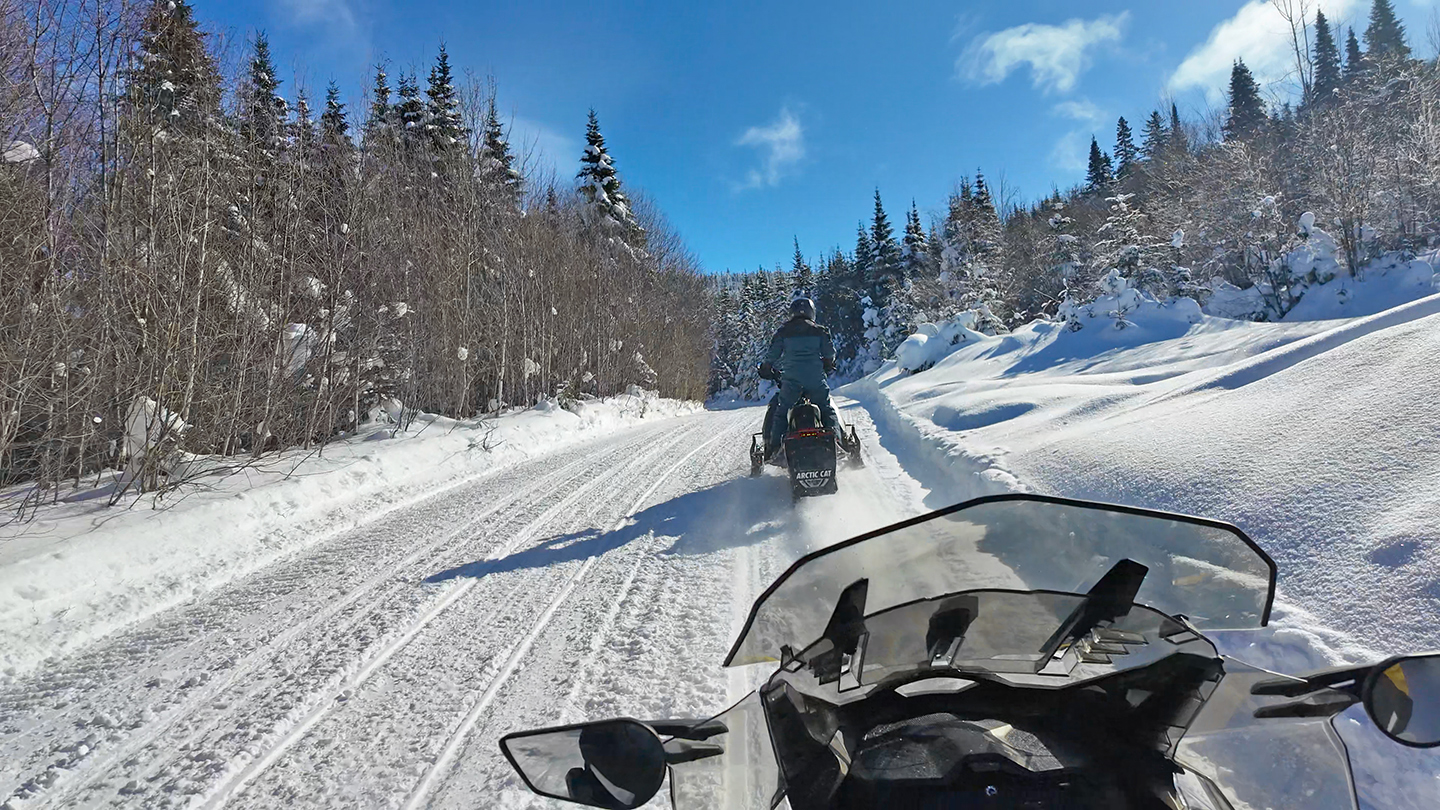
Landowners
Half of our network runs through private land. The land-use permissions you grant are the cornerstone of Quebec’s snowmobile trails.
FCMQ & Yamaha joint program
Your generosity may be rewarded
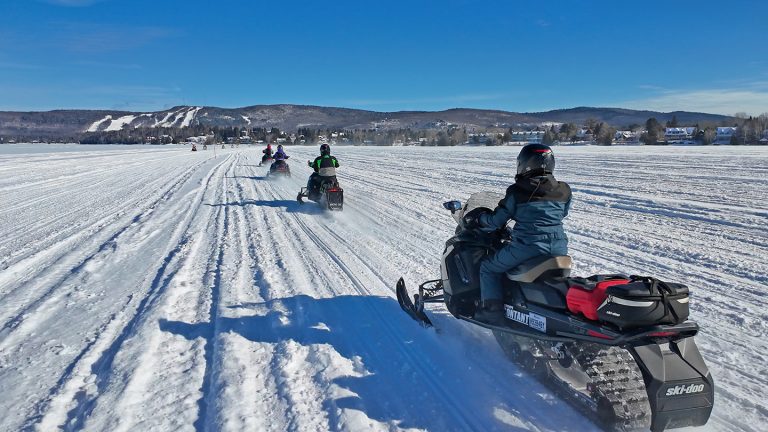
By granting a land-use permission to your local snowmobile club, you’ll have a chance to win one of 55 $1,000 gift certificates. Thanks to our partnership with Yamaha Motor Canada, these gift certificates can be redeemed for Yamaha products or vehicles at any Yamaha dealership in Quebec. What a great way to reward your contribution to snowmobiling in Quebec!
The Importance of land-use agreements
Land-use permission agreements are the cornerstone of the establishment and sustainability of our trail network, 50% of which runs through private land.
Thanks to these rights granted by landowners, the FCMQ is able to maintain a network of more than 30,000 km, allowing thousands of enthusiasts to fully enjoy their favourite activity.
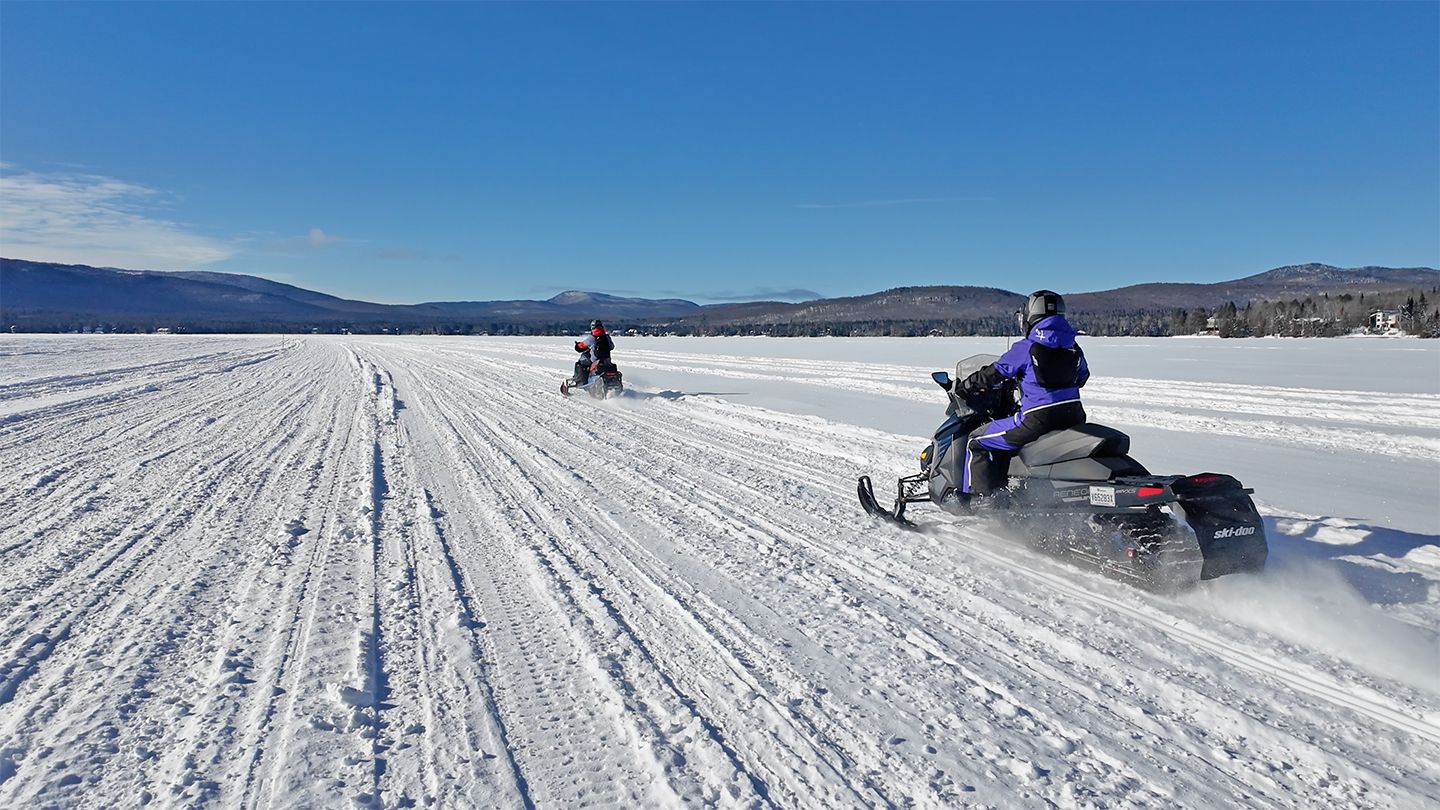
Thank you to those who open their land to us
Granting a land-use permission is a gesture of great generosity that goes far beyond simply pleasing snowmobilers. This dynamic network brings significant economic benefits to our regions and supports our local businesses during a time of year that is often more challenging. Every land-use permission is a true driver of vitality for our communities.
The process of establishing a land-use permission
Land-use permission agreements are granted through agreements between snowmobile clubs and the owners of the affected land—whether private, municipal, or government-owned. Here are the key steps in the process.
Snowmobile clubs identify the properties crossed by the trail route.
Clubs reach out to private owners, municipalities, or government agencies. An initial meeting can be arranged to explain the objectives and answer questions from the owner or their representatives.
The clubs provide liability insurance coverage to protect property owners in the event of an incident involving snowmobilers during the period when the land-use permission is in effect.
This insurance covers property owners against any property damage or injuries resulting from the use of their land.
The clubs maintain the trails and comply with the terms of the agreements: cleanup after the season, signage, etc.
Regular communication with landowners is necessary to maintain good relations and renew the agreements.
If a property owner wishes to terminate an agreement or raises concerns, a discussion is initiated to find a way to coexist harmoniously or to implement mitigation measures.
Only the landowner has the authority to revoke the land-use permission at any time by notifying the club concerned. In the event of the loss of a land-use permission, the club will, whenever possible, consider an alternative route to maintain the existing path.
Your rights as a homeowner are protected
The land-use permission does not affect your property rights in any way. You are simply granting the club permission to use a specific portion of your land for a specified period of time.
Liability insurance protects property owners against potential property damage or personal injury. In the event of an environmental issue, you have recourse to protect your rights.
Access is permitted only to snowmobiles during the winter and to holders of an FCMQ trail permit. You are free to revoke this land-use permission at any time.
The importance of respecting landowner rights
When riding a snowmobile, it is essential to stay within the trail markers. Any deviation from the designated boundaries can have serious consequences.
Areas off the trail are neither maintained nor secured, which increases the risk of accidents.
Unauthorised access can damage the land or harm crops. Such behaviour violates the agreements reached with the landowners.
Consequences for the entire community
Irresponsible behaviour can lead to a landowner revoking a land-use permission, with significant negative consequences extending far beyond the trail in question.
A trail could become impassable or lead to a dead end, affecting vital connections within the network.
Restaurants, gas stations, and lodging facilities rely on snowmobilers for their winter business.